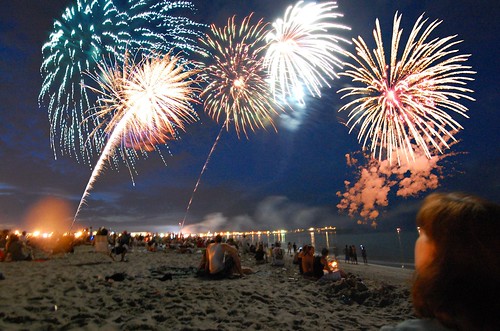
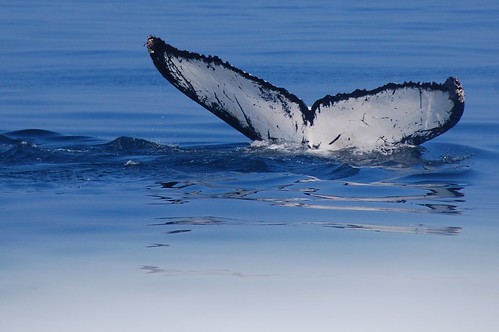
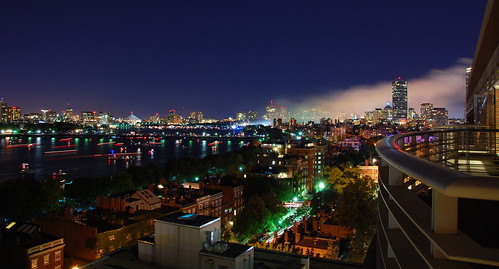
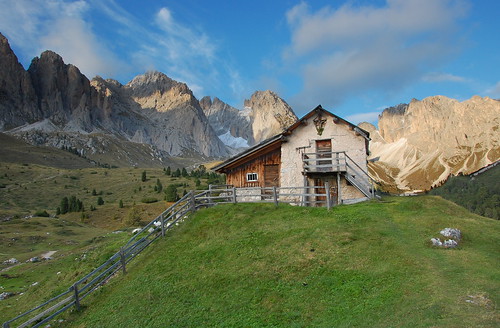
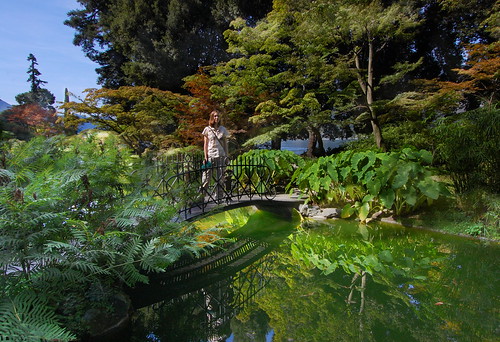
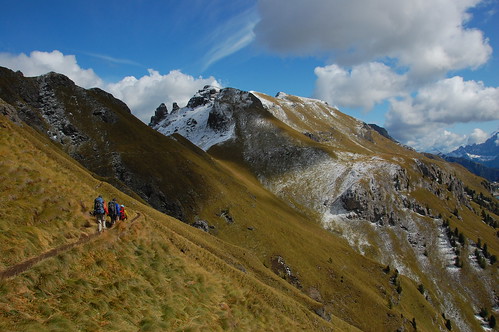
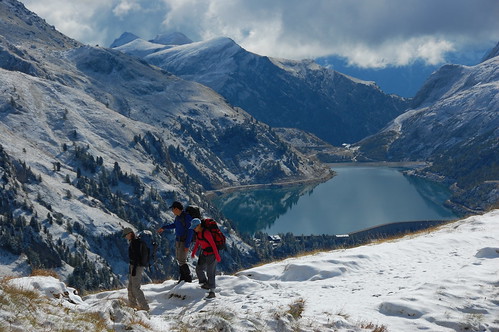
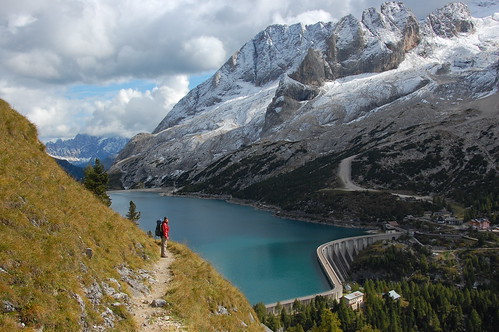
Two exposures, very poorly aligned. But with colors like this, it hardly matters.
By the Bay
Posted by Ed at 4:35 AM 0 comments Links to this post
Topics: exposure
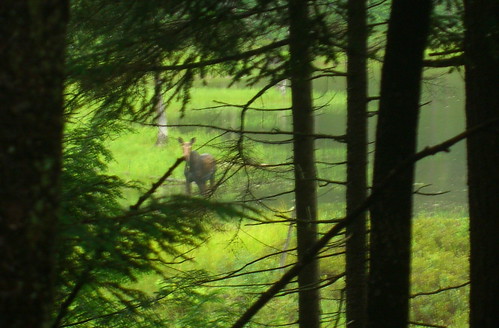
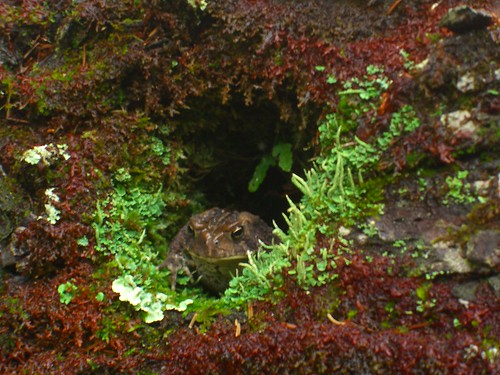
Down by the River
Posted by Ed at 10:28 PM 0 comments Links to this post
Topics: nature
It's Not the Camera
Lots of people seem to think that you need a great camera (whatever that is) to take a great photo. This is completely false. Fancier cameras can make photography faster and more convenient, but beyond that there's little relationship between the quality of the photo and the expense of the camera. I just saw this shot on Flickr Explore, it was taken with a $25 Holga:
Plastic lenses never lie, but they are known to blur the truth a bit, originally uploaded by Zeb Andrews.Posted by Ed at 6:09 PM 0 comments Links to this post
I am ready for spring.
Winter can be beautiful, but my favorite season is always which ever one is coming next. And here's some evidence that it's coming:
I took this photo several weeks ago now, so that might be the very first robin of spring. Birds are tough to photograph -- you need either a giant lens, or patience and luck. This is a very tight crop, which is why the quality is not great.Posted by Ed at 9:33 AM 0 comments Links to this post
Topics: bird dawn winter spring
Making Things Glow
Many things look much more interesting when light is shining through them instead of bouncing off of them. Frost and leaves are both good examples of this, so put them together and you get a pretty nice glowing photo. Compare with a shot of the same leaf from the other side, which I think is boring:
Anything with a fuzzy edge can benefit from some backlighting. Especially furry animals (or furry humans):
Posted by Ed at 12:19 AM 1 comments Links to this post
Topics: backlight
Making the Best of Difficult Light
My grandma, 87 years old and doing great!
Indoor candids like this photo can be a challenge. It's usually too dark, and the various lights in the room are often different colors. If you use an on-camera flash, it makes people look like deer in headlights, and you're likely to get red-eye too. Save the pop-up flash for bright outdoor shots, where it can fill in harsh shadows.
I took this photo with only ambient light, at ISO 1600. One of the big advantages of a digital SLR over a smaller point-and-shoot is that the sensor is larger, so it can capture more light. Small cameras usually only work well up to about ISO 400, which wouldn't have been enough for this shot.
The exposure was 1/25th of a second at a zoom of 50mm. This is within the realm where camera shake can blur your shot, but I'm using a stabilized lens (Nikon 18-200mm VR) that actively cancels out vibrations. You still need to catch the subject sitting still, because at shutter speeds this low any motion will be blurred.
The various incandescent and compact fluorescent bulbs in the room made it hard to get the color right. I compensated in GIMP. An alternative would be to shoot in RAW format and choose a white-balance at your leisure. At the very least, you can improve your indoor shots by picking the white balance setting in your camera that best describes the room, usually "incandescent" (aka "tungsten") or "fluorescent".
The background was cluttered, so I blurred and darkened it. You can get a nice naturally blurred background by shooting with a wide aperture, but the distance between the subject and the background is too short in this case to get a strong blur, so I blurred it further in software. I also brightened some shadows around the eyes. Eyes are critical in any portrait, because everyone's attention is naturally drawn to other people's eyes. Portrait photographers go to great lengths to get perfect highlights in the eyes.
Posted by Ed at 1:15 AM 0 comments Links to this post
Topics: blur, indoor, portrait, sensitivity